

Among the treasures of Eastern art, ink painting and Zen board calligraphy have become increasingly dazzling with their unique aesthetic and philosophical connotations over thousands of years. These two forms of art not only carry rich cultural information, but also reflect Eastern philosophy and aesthetic taste. This article will explore the historical origins of ink painting and Zen board calligraphy, trace their development trajectory, and reveal how they integrate and influence each other, jointly creating an artistic legend.
Main text:
1、 Historical origins
The origin of ink painting and Zen board calligraphy can be traced back to ancient China, especially after the Tang Dynasty. With the acceptance of Zen thought by literati and ink scholars, these two art forms began to gradually form and flourish.
Ink painting, as the name suggests, uses water and ink as the main materials, emphasizing the harmonious unity of artistic conception and nature. It originated in the Han Dynasty of China, but its true maturity occurred in the Tang Dynasty, when painters such as Wang Wei began to attempt to express the beauty of mountains and rivers in light ink, laying the foundation for ink painting.
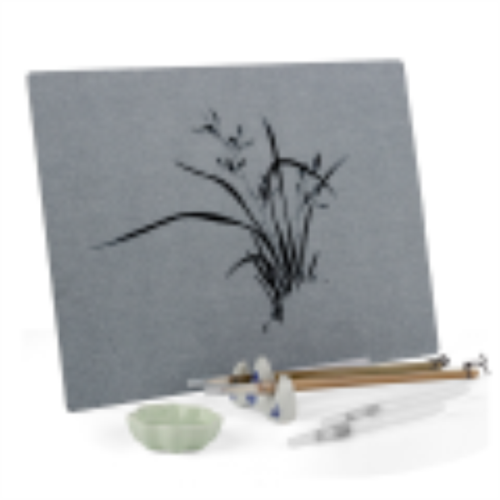
Zen board calligraphy, also known as Zen meaning calligraphy or Zen Buddhism calligraphy, is a unique writing art that emerged with the spread of Zen Buddhism in China. It is not only a way of recording words, but also a means of cultivating oneself and reflecting the inner world and spiritual pursuit of the writer.
2、 Development and evolution
With the passage of history, ink painting and Zen board calligraphy have undergone multiple changes and developments. The Song Dynasty was a golden period for the development of ink painting. Painters such as Fan Kuan and Mi Fu focused on expressing the charm and vitality of natural scenery in their works, with more free and unrestrained brushstrokes.
Entering the Yuan Dynasty, with the rise of literati painting, ink wash painting paid more attention to personalized expression. Painters pursued poetry in their paintings, and painting was not only a visual enjoyment, but also a spiritual touch.
As for Zen board calligraphy, its development process is equally brilliant. The calligraphy works of Huai Su from the Tang Dynasty and Huang Tingjian from the Song Dynasty are full of Zen meaning, with powerful and powerful brushstrokes and free and flexible structures, fully showcasing the writer's mood and cultivation.
3、 Mutual influence
Ink painting and Zen board calligraphy have permeated and influenced each other in their development process. Many calligraphers are also painters, who use the beauty of calligraphy's lines in their paintings and draw inspiration from the composition and artistic conception of painting in their writing. This artistic intersection enriches the expressive power of both, giving the work both visual beauty and spiritual depth.
4、 Modern development
Entering modern society, ink painting and Zen board calligraphy face new challenges and opportunities. With the development of technology and the trend of cultural globalization, these two traditional art forms have begun to combine with modern art concepts and technologies, resulting in new styles and schools. At the same time, they are also being understood and appreciated by more and more international friends, becoming an important carrier of cultural exchange.
Conclusion:
Ink painting and Zen board calligraphy are treasures of Eastern culture, with profound historical origins and diverse development processes. From ancient times to the present, these two forms of art not only showcase the talents and creativity of artists, but also convey the unique charm of Eastern philosophy and aesthetics. In the future, they will continue to develop through inheritance and innovation, allowing the world to witness the infinite possibilities of Eastern art.